The Warrior and the Sage
Cultivating power without being ruled by it.
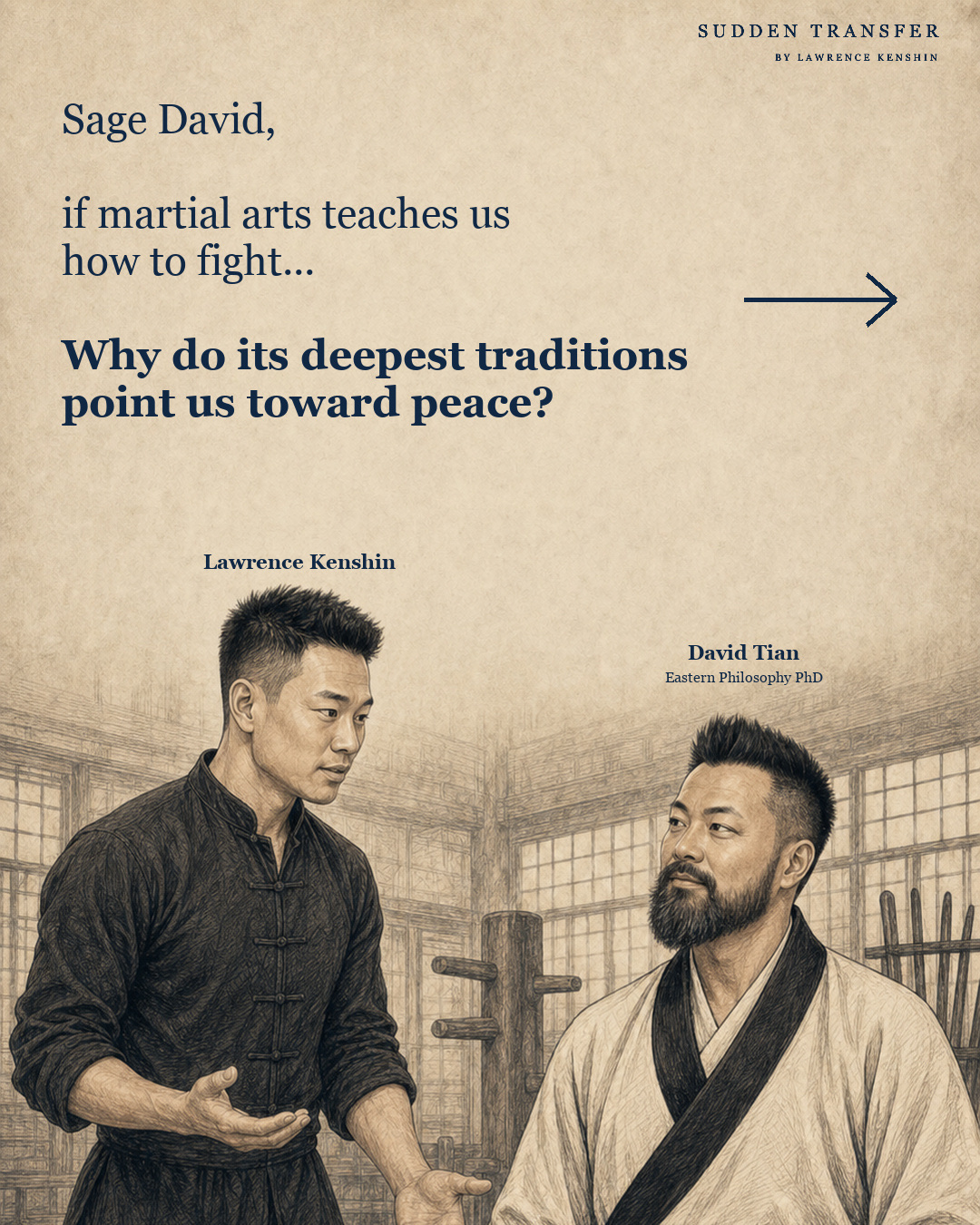
Martial arts teaches us how to fight. So why does its deeper philosophy keep bringing us back to peace?
We learn to strike, defend, endure pressure, and act decisively. Yet we also look to great teachers for patience, humility, and restraint. The ability to hurt another person brings a question that technique alone cannot answer:
What will guide the power you develop?
This is the question behind the warrior and the sage. The warrior gives us the courage to face difficulty and act. The sage asks us to understand what the moment requires, and whom our actions will serve.
Both qualities belong in the same person.
In Why You Are a Warrior, David Tian explores how martial arts can become a practice of character: courage alongside compassion, discipline alongside humility, and strength that helps us meet life with greater awareness.
Feel Deeply. Keep Your Freedom.
It is tempting to imagine that becoming stronger means becoming harder to wound. We picture someone whose confidence cannot be shaken, whose emotions never interrupt them, whose composure costs nothing.
That picture leaves very little room for being human.
Love makes us vulnerable. Caring about our work makes failure matter. Caring about another person gives loss its weight. A life with meaning will ask us to feel.
The practice is learning how to remain present when those feelings arrive. Anger can be acknowledged. Fear can be heard. Grief can be given room. We can feel their force while taking responsibility for what we do next.
There is strength in feeling deeply and still being able to choose your response.
Vulnerability also changes how we meet others. Remembering our own fear and uncertainty can make it easier to recognize theirs. Compassion grows through that recognition. We can listen while keeping our boundaries, and we can be firm while preserving the dignity of the person in front of us.
That freedom takes practice. Some days it begins with the smallest pause: enough time to recognize the feeling before handing it the direction of your life.
The Strength to Return
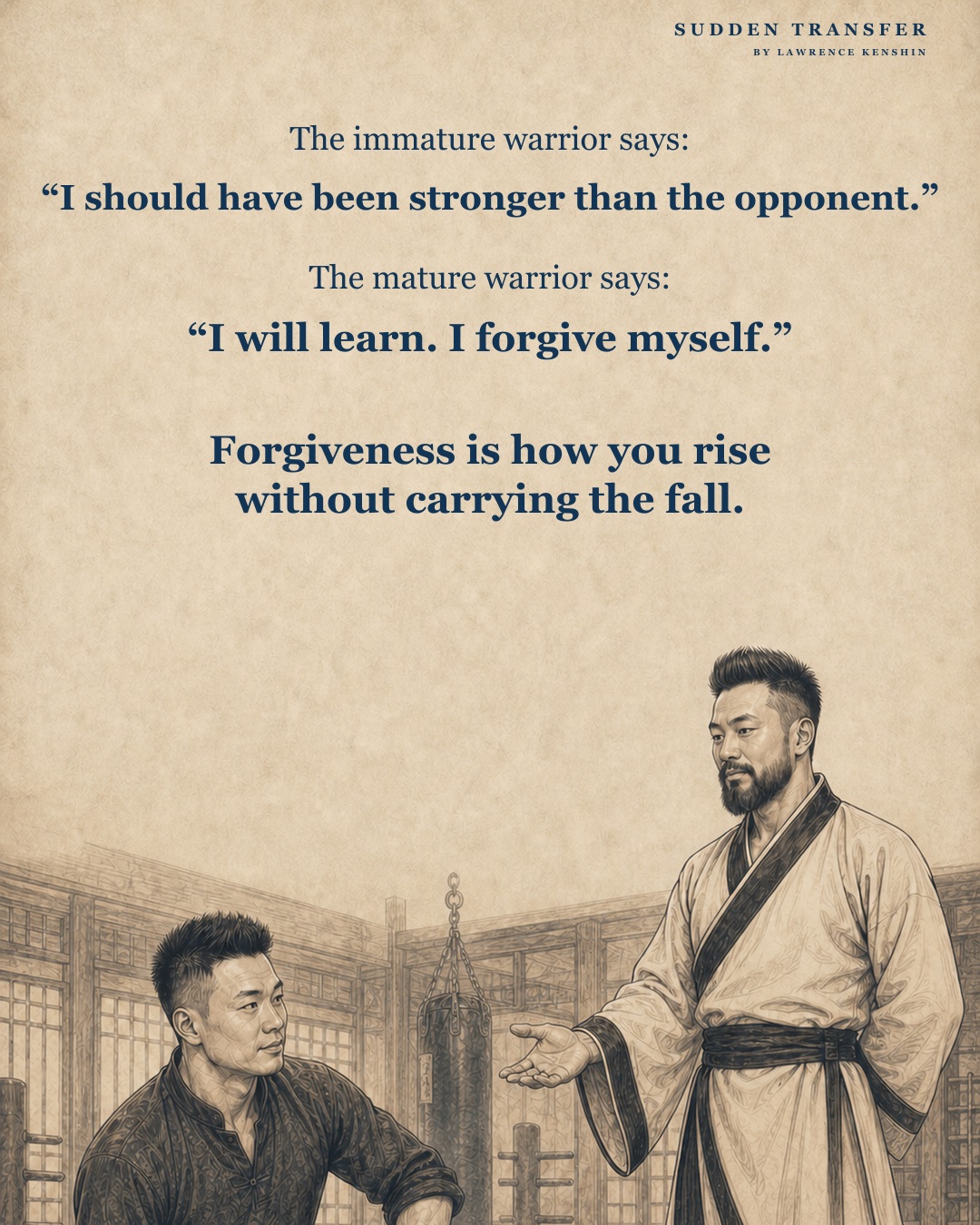
The warrior spirit becomes especially important when effort fails to produce the result we wanted.
You can prepare carefully, commit completely, and still lose. An opponent may be better on the day. A mistake may undo months of work. Life can change the conditions without asking whether you are ready.
Defeat gives you something to examine. It can show you what needs work, where your judgment failed, or what you could not yet handle. The difficulty begins when a result becomes a verdict on your worth.
This is where self-forgiveness matters.
You can take responsibility, repair what you can, and learn from what happened. Forgiving yourself allows that work to continue without demanding that you punish yourself forever.
Perhaps the lesson is technical. Perhaps you need better preparation, more patience, or the humility to ask for help. The useful question is specific: what can I carry forward from this experience? That question gives your next effort a direction.
Fall. Learn. Regroup. Return.
Each return offers another opportunity to put what you have learned into practice.
Calm Under Pressure
Martial arts gives these ideas a physical language.
Under pressure, notice what happens to your breathing, your shoulders, your attention. The urge to force an outcome can arrive before you have understood the opening in front of you.
In the film, David connects composure with controlled aggression and the patience of counterstriking. A martial artist learns to conserve energy, read the exchange, and commit when the moment arrives.
That requires active attention. Waiting has a purpose. Relaxation supports readiness. Decisive action grows from seeing clearly enough to recognize when it is needed.
Composure gives you time to see the opening.
Preparation gives you a foundation to trust. In a live exchange, you still have to notice what is actually happening. The opponent moves. The distance changes. A familiar opening disappears. Presence allows the skill you have practiced to adapt to the person and the moment in front of you.
Outside the gym, the same question is useful: does this moment call for action, a boundary, a conversation, or time to understand? A pause can help you tell the difference.
Give Your Force a Direction
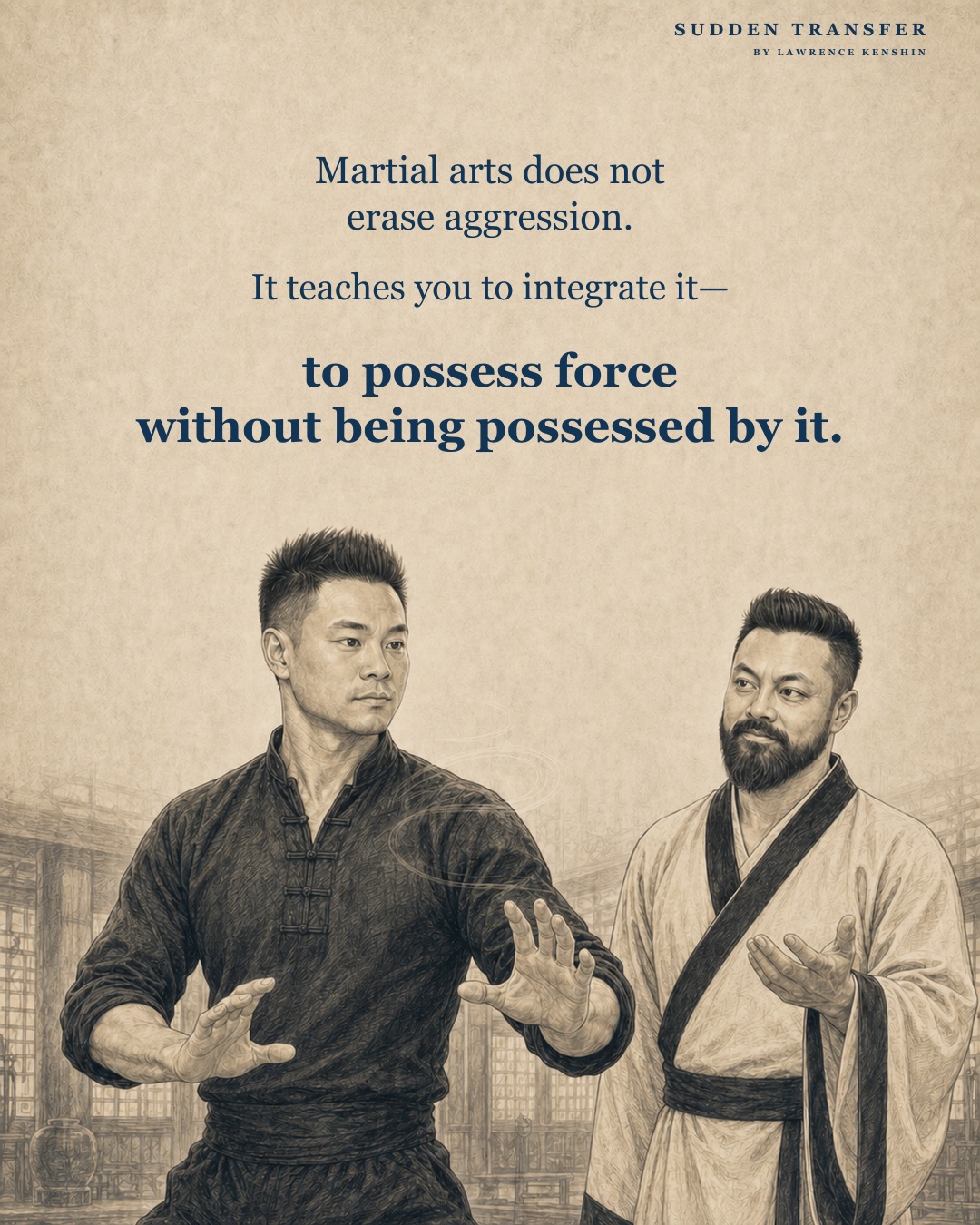
Aggression has energy. It can help us defend a boundary, stand up for someone, or commit to difficult work. It also asks for judgment.
When pride takes charge, every disagreement can begin to feel like a challenge. When fear sets the terms, we can spend our energy proving that we are beyond fear. The need to demonstrate strength can become its own burden.
Training offers a place to examine that impulse. You learn how much force a situation requires. You learn to respect a partner, recognize a limit, and stop when the work is done.
Those choices give power a direction.
The ability to act remains. So does the responsibility to decide whether acting will help. Restraint becomes meaningful because there is real capability behind it.
Where the Warrior Meets the Sage
The warrior develops resolve. The sage brings perspective. Together, they ask us to cultivate strength with an understanding of its consequences.
That understanding can turn strength toward service: protecting a training partner, speaking honestly, keeping a difficult commitment, or making space for someone who needs care.
These are ordinary moments. They rarely resemble the dramatic image of victory. Yet they reveal what our power is for.
Peace, understood this way, is something we practice through our decisions. It can require the courage to set a firm boundary. It can require an apology, an act of forgiveness, or the willingness to let an argument end.
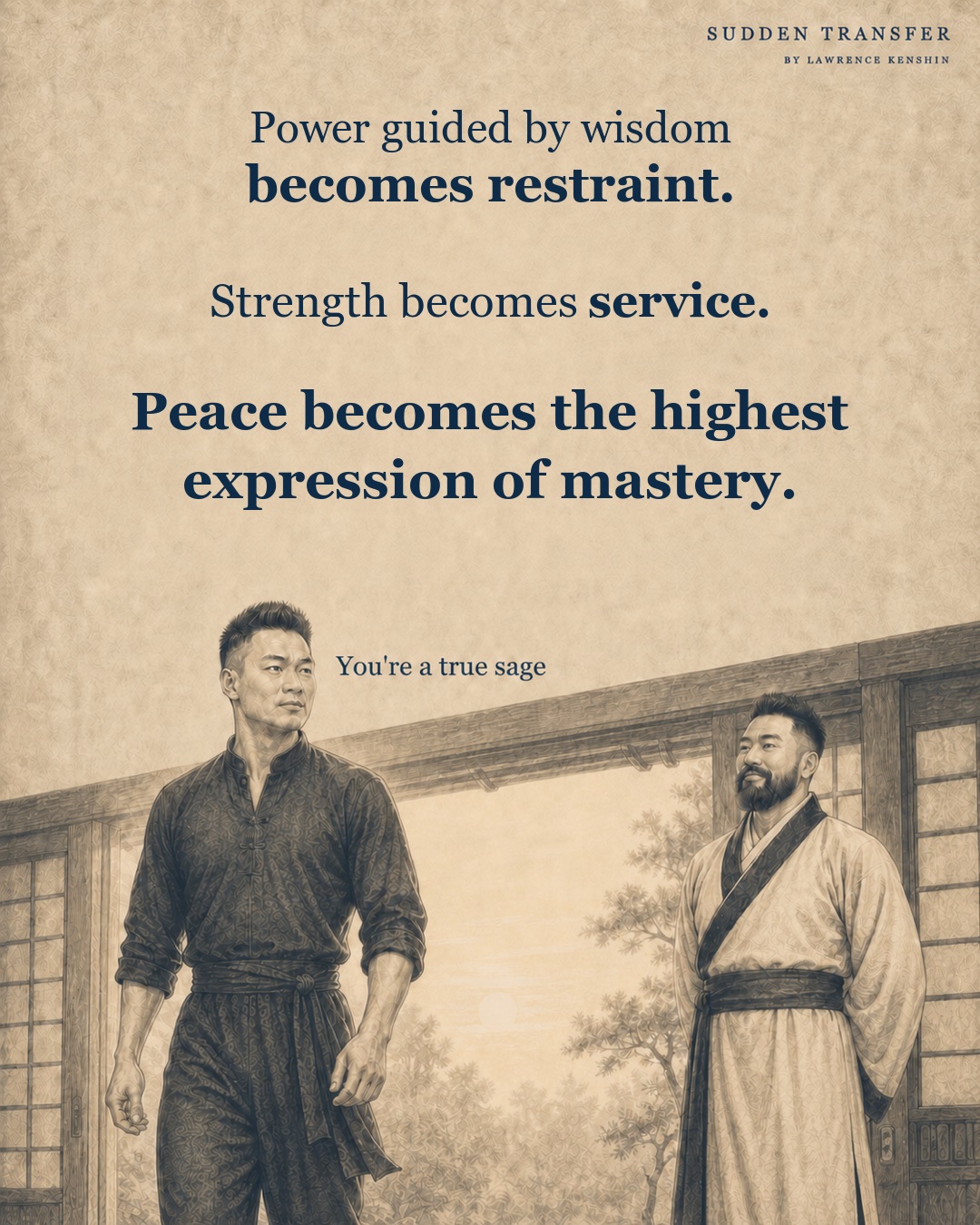
Power guided by wisdom becomes a responsibility we are willing to carry.
Keep developing your skill. Build the capacity to face difficulty. Pay attention to the person who is emerging through that work.
The warrior gives you the strength to act.
The sage helps you make that strength worthy of trust.
Unlock Your Potential
The warrior’s power. The sage’s wisdom.
Join me in exploring martial arts, self-mastery, and how to express more of the power and potential within you.